When Grief Walks In the Room With You
On sudden loss, watching your father break, and why safety still matters even when nobody says they want to die
Introduction
There are moments in life that don’t just hurt, they divide your life into two different worlds. There is the world before it happened, and there is everything that comes after. At the beginning of this month, my family crossed that line. My stepmother, Natarsha, died suddenly in her bed. There was no warning, no gradual decline, no quiet preparation for what was coming. One moment she was alive, present, part of the rhythm of everyday life, and the next moment she was gone. That kind of loss does not ease you into grief. It doesn’t give you time to gather yourself. It places you directly inside of it, whether you’re ready or not.
What has stayed with me is not only that she died, but how my father experienced that moment. He didn’t receive a phone call that allowed him to brace himself. He didn’t have a doctor explain it in careful language. He heard the dog barking in a way that broke through the normal sounds of the house. It was the kind of barking that pulls your attention whether you want it to or not. He shouted upstairs, expecting a response, expecting her voice to come back the way it always had. That expectation is important, because it shows how normal life was just seconds before everything changed. But this time, there was no answer. The silence was not neutral. It carried weight, and somewhere in that moment, before he even moved, something in him knew.
He went upstairs and found her in the bed, motionless, the kind of stillness that your body understands before your mind can form the words to describe it. He didn’t stand there in shock. He moved immediately. He performed CPR. He called emergency services. He did what you are supposed to do when someone you love is in front of you and not breathing. Love does not hesitate in those moments. It acts. It tries. It refuses to accept loss without doing everything possible to fight it. But there is a truth that sits underneath all of that effort, and it is one that people do not prepare you for. Sometimes, by the time you begin trying to save someone, they are already gone. And when you are the one who was there, when you are the one who tried, that moment does not simply pass. It stays with you in a way that is hard to explain to anyone who has not lived it.
When You Don’t Just Lose Someone, You Witness It
There is a difference between losing someone and witnessing their death, and that difference matters more than people realize. My father did not just lose his wife. He experienced the moment of her death in real time, and that changes how grief lives in a person. This is not just emotional loss. This is something that moves through the body, something that imprints itself on memory in a way that does not fade easily. It becomes part of how the mind processes what has happened, and it does not stay neatly in the past.
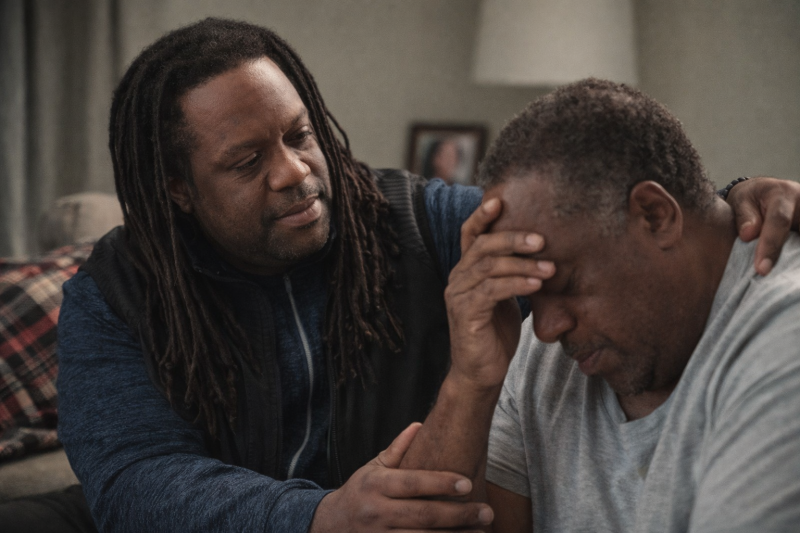
I watch him now, and what I see is not a single emotional state but movement between states that don’t ask permission. There are moments where he is quiet, almost too quiet, as if his system is holding everything back so it does not come all at once. Then there are moments where something shifts, sometimes small, sometimes unnoticeable to anyone else, and the weight of it breaks through. He cries, not in a controlled or measured way, but in a way that tells you something deeper has been touched. It is not just sadness. It is the collision of memory, loss, and the reality of what he experienced.
And what stands out to me is that he is not always just remembering. There are moments where you can see that he is reliving. The body does not always distinguish between past and present when something traumatic has happened. The moment upstairs, the image, the effort, the realization, it does not stay contained in one place. It loops. It comes back. It surfaces in quiet spaces, in pauses, in the absence of distraction. That is what trauma does. It revisits. And when grief is layered on top of that, it becomes something heavier than what most people are prepared to understand from the outside.
Grief Does Not Look the Same for Everyone
One of the things that becomes clear very quickly is that grief does not follow a pattern that we can easily predict. We often want grief to be structured, to move in stages that make sense, to look consistent enough that we can recognize it and respond to it. But that is not how it works in real life. Grief interrupts. It shifts. It changes from moment to moment without warning.
There are times when my father is able to talk, to reflect, even to sit in a moment that feels somewhat steady. And then there are times when that steadiness disappears, and something deeper takes over. That does not mean something is wrong with him. It means something real has happened to him. The problem is not that grief moves this way. The problem is that we are often uncomfortable when it does, and we try to bring people back to a version of stability too quickly.
What I am learning is that this is not something to correct. It is something to witness and to respect. Grief is not a problem to be solved. It is an experience that the body and mind have to move through in their own time, even when that time does not make sense to anyone watching.
The Part We Don’t Talk About
At the same time, there is another layer to this that is harder to talk about, especially in spaces where we want to focus only on comfort and presence. My father has a traumatic brain injury, and he lives in a home with guns. There is no history of suicidal thoughts, no statements that would immediately raise alarm, nothing that would make someone say this is an urgent crisis. But that is not the standard we should be using.
Grief like this changes a person’s emotional baseline. Trauma affects how the brain processes stress and regulates response. A brain that has already experienced injury does not always filter and manage overwhelming emotion in the same way. When you add sudden loss, witnessed death, and the kind of internal replay that trauma brings, you are dealing with a level of vulnerability that cannot be ignored simply because no one has said the words out loud.
People have moments. That is the reality we have to start from. Moments where the weight becomes too much, where clarity narrows, where emotion takes over in ways that are not predictable. And if, in that moment, everything needed to act on that pain is already within reach, then we have to be honest about what that creates.
You do not wait for someone to say they want to die before you think about their safety. You pay attention to what is present while they are hurting.
Why Safety Planning Is Love
There is a misunderstanding that comes up often when we talk about safety. People hear it as suspicion, as if paying attention to risk means you believe the worst about someone. But that is not what this is. This is about recognizing the reality of human experience under pressure and responding to it with care that is both compassionate and aware.
Love does not wait for the worst moment to arrive before it decides to act. It moves earlier than that. It pays attention to the whole picture, not just what is being said out loud. It understands that someone can be strong, faithful, and stable, and still have moments where the weight of grief disrupts all of that.
Safety planning is not about control. It is about protection. It is about making sure that when a moment comes, and moments do come, the environment does not make that moment more dangerous than it needs to be. It is about reducing risk while someone is carrying something heavy, not because you doubt them, but because you care enough to think ahead.
Presence Is Not Enough
The church has learned how to be present in grief, and that matters deeply. We bring food, we sit, we pray, we show up in ways that communicate that no one has to walk through loss alone. But what I am seeing now is that presence, while essential, is not always sufficient on its own.
Real compassion does not stop at being in the room. It pays attention to what is happening in the room. It notices patterns, environments, changes in behavior, and the quiet things that are easy to overlook. It asks not only how someone feels, but what they need in order to be supported in a way that is complete.
If we separate compassion from awareness, we leave gaps in care that matter. Loving people well means we have to hold both at the same time.
Holding Two Things at Once
Right now, I am holding two realities that do not cancel each other out. I am grieving Natarsha, and that grief is real, present, and unfolding in ways that are still hard to fully name. At the same time, I am watching my father, staying close, paying attention, not only to what he says but to what I see and what I know about what he is carrying.
I am giving him space to feel what he feels without interruption, and I am also making sure that he is not alone for long stretches of time. I am honoring his grief as something sacred, and I am thinking carefully about his environment and what needs to be in place for him to move through this safely.
That tension is not simple, but it is necessary. That is what love looks like when it is fully engaged, when it refuses to choose between compassion and responsibility.
Church Practice
• Stay close to people in the first weeks of sudden loss, not just the day it happens
• Understand the difference between grief and traumatic grief and respond accordingly
• Do not wait for verbal warning signs before thinking about safety
• Pay attention to environment, especially access to lethal means
• Normalize emotional shifts instead of trying to stabilize them too quickly
• Create rhythms of presence so people are not left alone for long periods
• Ask direct, caring questions when something feels off instead of avoiding it
• Share responsibility for care so no one person carries the full weight
• Treat safety planning as an expression of love, not suspicion
Today’s Benny
May you have the wisdom to sit with grief without trying to rush it, the awareness to notice what others overlook, and the kind of love that does not just stay present in the pain, but quietly protects the person carrying it.
Add comment
Comments